


The DS-260 form is one of the most important steps in the U.S. immigrant visa process. It’s your official online immigrant visa application. This online form gathers your personal, educational, and travel history, and even a small mistake can lead to visa delays or rejection and the information you provide will be used by U.S. consular officers to decide whether you qualify for the visa.
Unfortunately, many applicants make small yet costly mistakes that result in delays, additional processing time, or even denial of the application. The good news? These mistakes are avoidable if you know what to look out for.
In this guide, we’ll go over 10 common mistakes applicants make in filling DS-160 form — and how you can avoid them. If you want your visa process to go smoothly, pay close attention to these points.
Table of Contents
Mistake 1: Leaving Sections Incomplete
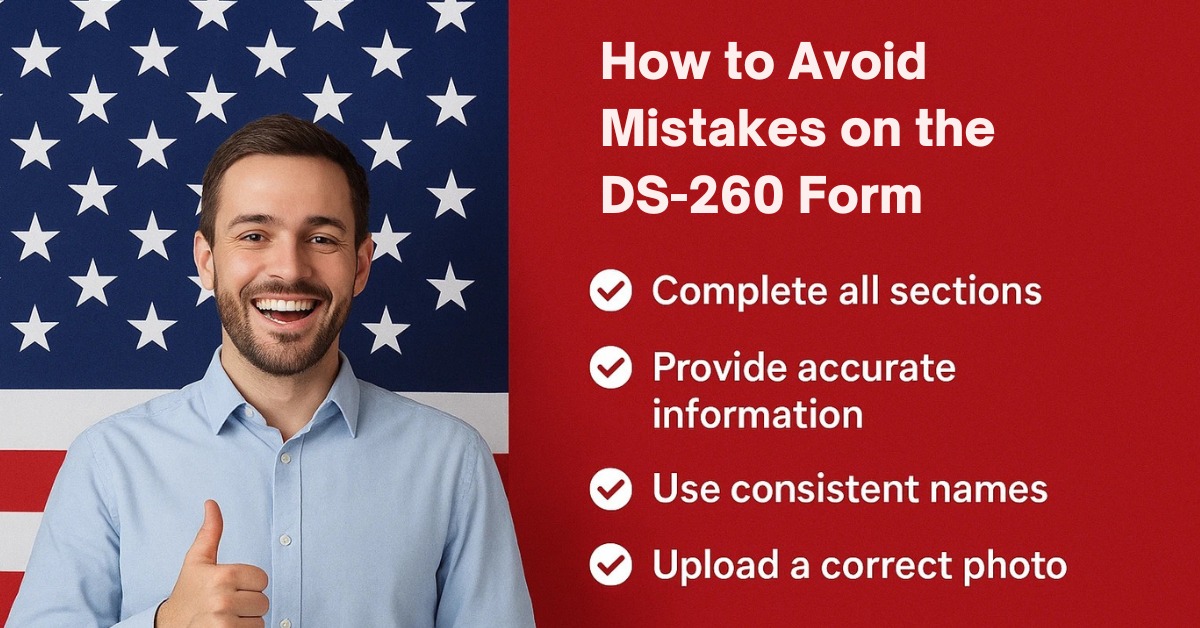
Many applicants rush through the DS-260 and miss required fields. Every section is important, even if it feels repetitive. Incomplete sections may cause the National Visa Center (NVC) to send your form back for correction.
✅ Tip: Double-check every section before hitting submit. Incomplete forms may be returned by the National Visa Center (NVC) for correction.
Mistake 2: Providing Inaccurate Personal Information
A small typo in your name, date of birth, or passport number can create major issues. This is especially problematic if your DS-260 information doesn’t match your passport or birth certificate.
✅ Tip: Keep your passport and other identification documents in front of you while filling out the form.
Mistake 3: Using Different Names Without Explanation
If you have used other names (maiden name, nickname, etc.) and don’t mention them, it may raise questions during your interview.
✅ Tip: Always list all names you have legally used and provide documentation if needed.
Mistake 4: Incorrect Address History
Your address history should be complete and accurate for the last 5 years (or more if required). Missing or overlapping addresses can create suspicion.
✅ Tip: Use utility bills, lease agreements, or official letters to confirm your address timeline.
Mistake 5: Wrong Employment Details
Applicants sometimes forget to include short-term jobs or mistakenly enter incorrect employment dates. The U.S. government takes work history seriously to check credibility.
✅ Tip: Include all jobs — even short-term ones — with correct dates.
Mistake 6: Failing to Disclose Previous Travel or Visa Refusals
Many people think hiding a visa refusal will improve their chances — but it often backfires. The U.S. government keeps detailed immigration records.
✅ Tip: Always be honest about past visa refusals, deportations, or immigration violations.
Mistake 7: Uploading Wrong or Low-Quality Photo
Your photo must meet U.S. visa photo requirements (size, background, lighting, etc.). Wrong dimensions or poor quality can cause delays.
✅ Tip: Get your visa photo taken professionally to meet all U.S. Visa Photo Requirements.
Mistake 8: Not Reviewing Before Submission
Submitting the DS-260 without reviewing is a big mistake. Once submitted, you can’t make changes easily unless the NVC reopens it.
✅ Tip: Review your application at least twice before submitting.
Mistake 9: Submitting Without Proper Supporting Documents
Your DS-260 details should match your supporting documents. For example, your marriage date should match your marriage certificate exactly.
✅ Tip: Read this guide to ensure your documents are in order: How to Prepare Supporting Documents for Your Visa Interview
Mistake 10: Missing Submission Deadlines
If you delay submission, your visa case may be closed, requiring you to start over.
✅ Tip: Keep track of NVC deadlines and submit your DS-260 as early as possible.
Final Thoughts
Filling out the DS-260 immigrant visa application correctly is not just about answering questions — it’s about providing an accurate, honest, and complete picture of your history. Take your time, review your answers, and ensure your documents match your application details.
Remember, even a small mistake can delay your immigration process by months. Avoid the mistakes above, and you’ll be one step closer to a successful U.S. visa interview.