


Preparing documents for a visa interview can feel stressful — especially when your interview date is getting close. You’ve already filled out the forms, paid the fees, and maybe even booked your tickets. But one step that can make or break your application is how well you prepare your supporting documents.
Think of these documents as your proof — proof that you are who you say you are, that your reason for traveling is genuine, and that you have the means and intention to follow the visa rules. The visa officer doesn’t know you personally, so your papers are your voice.
If you organize them clearly and professionally, you’ll make a positive impression and help the officer make a quick, confident decision in your favor.
Here’s a detailed, easy-to-follow guide so you can walk into your interview feeling confident, calm, and prepared.
Table of Contents
1. Understand Which Documents You Need for Visa Interview
Every visa type has its own list of required documents. For example, a tourist visa may focus on your travel plans and proof of funds, while a student visa requires admission letters and proof of tuition payment.
Always check the official embassy or consulate website for your visa category, because requirements can vary from country to country and can change at any time. For example:
- U.S. Visa Requirements: travel.state.gov
Common documents you may need include:
- Valid Passport – Must be valid for at least 6 months beyond your intended stay.
- Visa Application Form – Example: DS-160 for US non-immigrant visas.
- Appointment Confirmation Letter – Proof you scheduled your interview.
- Photographs – Recent passport-size photos meeting visa photo standards.
- Financial Proof – Bank statements, salary slips, or tax returns to show you can cover your expenses.
- Travel Itinerary – Flight bookings, hotel reservations, or invitation letters.
- Purpose-specific Documents –
- Student visa: Admission letter, proof of tuition payment
- Business visa: Company letter, conference registration
- Tourist visa: Planned travel route, sightseeing list
2. Organize Documents in a Logical Order
Presentation matters. Arrange your documents in a neat folder with clear sections. This makes it easier for the visa officer to review them quickly.
A good order might be:
- Passport and Photos
- Visa Application Form and Confirmation
- Travel Itinerary
- Financial Proof
- Additional Supporting Documents (invitation letters, employment proof, etc.)
Tip: Use labeled dividers or sticky notes for quick access during the interview.
3. Ensure Documents Are Complete and Up to Date
An outdated document or missing page can delay your application or lead to rejection. If you’re applying for a U.S. visa, ensure your copies match the details you entered when you filled out your DS-160 Form. If you’re not sure how to fill it correctly, you can check our detailed guide: How to Fill DS-160 Form for US Visa Online (2025 Guide).
- Bank statements should cover the latest 3–6 months.
- All letters must be signed, dated, and on official letterhead.
- If your documents aren’t in English, provide certified translations.
4. Keep Originals and Photocopies
Most embassies require original documents for verification but will keep photocopies in their records. Keep both sets ready — originals in one section, copies in another. This shows you’re organized and professional.
5. Practice How You Will Present Them
The visa officer might not ask for every document during visa interview, but when they do, you should be able to hand it over confidently without shuffling around. Practice retrieving them in order at home.
6. Prepare Additional Proof for Stronger Chances
Sometimes, going beyond the basic requirements helps:
- Proof of ties to your home country – property documents, family photos, employment letters.
- Return flight bookings – shows you plan to come back.
- Travel insurance – adds credibility and preparedness.
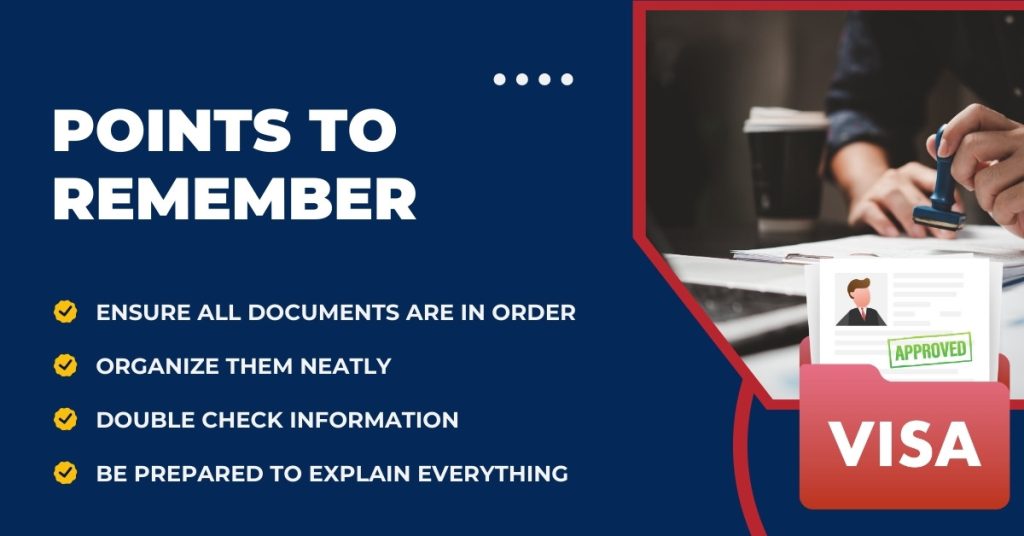
Final Thoughts
Preparing your supporting documents is more than just a checklist task — it’s about making your case clear, trustworthy, and professional. A well-prepared set of documents tells the visa officer:
“I’m serious about my travel plans, I’m organized, and I’ve got nothing to hide.”
The more prepared you are for visa interview, the less nervous you’ll feel on the big day. Remember to check your embassy’s website for the latest requirements, arrive early, and carry yourself confidently.
Safe travels and good luck with your visa interview!